

Liver Knowledge Centre
Everything about the liver in one place — cirrhosis and liver cancer explained in plain language, with honest guidance on diagnosis and treatment options.

Understanding your Liver
The liver is essential for digestion, detoxifying the blood and storing energy — and because it has few nerve endings, liver disease can progress silently for years before symptoms appear. This hub brings together everything on the liver: cirrhosis (scarring from long-standing liver disease) and liver cancer, so you understand what is happening and what your options are.
Liver problems are often picked up late because early damage rarely causes pain. Routine liver tests, and acting quickly on jaundice, swelling or confusion, make the biggest difference to outcome.
Common symptoms to watch for
Jaundice (yellowing of skin/eyes)
Ascites (fluid swelling in the abdomen)
Unexplained weight loss
Loss of appetite
Persistent abdominal pain
Ongoing fatigue
Liver conditions explained
Liver cancer — what to know
Diagnosis & our approach
Liver Function Tests
Blood tests that screen for damage and track disease over time.
Imaging
Ultrasound, CT and MRI to look for scarring, lesions or tumours.
Endoscopy Where Needed
Gastroscopy or ERCP when cirrhosis or bile-duct involvement requires it.
Multidisciplinary Review
Surgeon, hepatologist and oncologist plan complex cases together.
How we treat Liver conditions
Featured treatment
Liver Cancer
Surgical and multi-modality treatment of liver tumours — including resection of primary and secondary cancers in a dedicated GI cancer unit.
View treatment details →Real liver patient stories
 DWARIKA HOSPITALPatient Education
 DWARIKA HOSPITALPatient Education
 DWARIKA HOSPITALVerified Patient Story
Verified
DWARIKA HOSPITALVerified Patient Story
Verified  DWARIKA HOSPITALPatient Education

Latest medical evidence on Liver
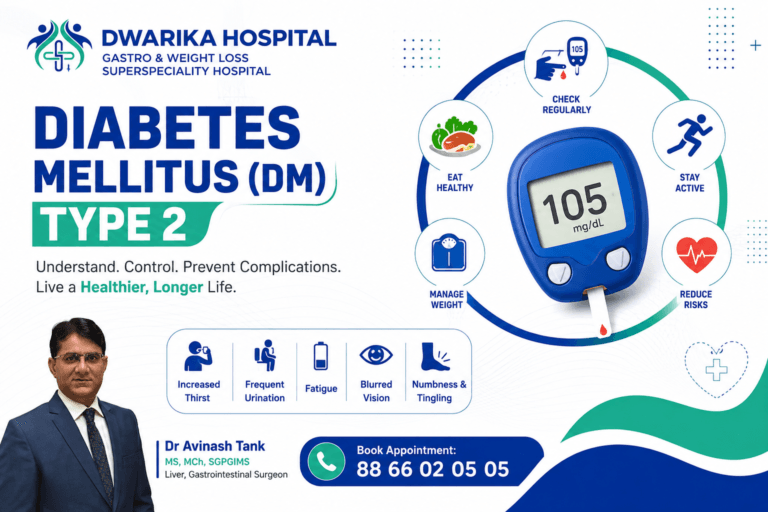 DiabeticType 2 Diabetes: What It Is, Why It Happens, and How to Control It
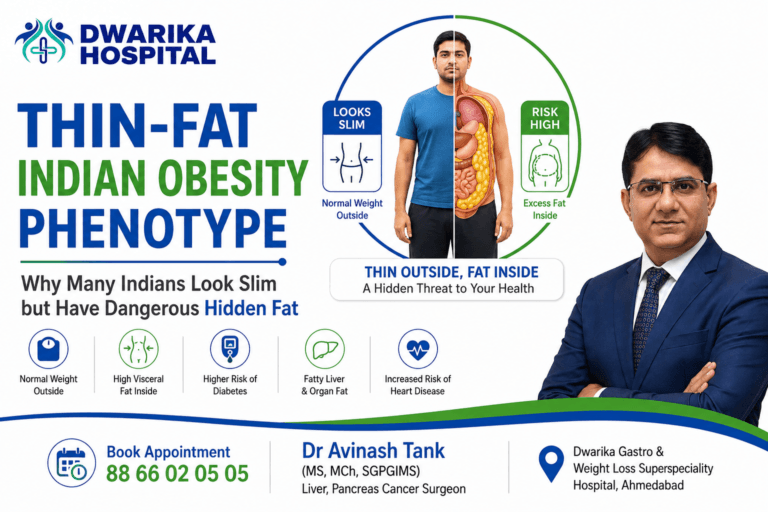 ObesityWhy Many Indians Look Slim but Have Dangerous Hidden Fat
UncategorizedMetabolic Surgery and Type 2 Diabetes Remission: The Evidence
ObesityWhy Many Indians Look Slim but Have Dangerous Hidden Fat
UncategorizedMetabolic Surgery and Type 2 Diabetes Remission: The Evidence
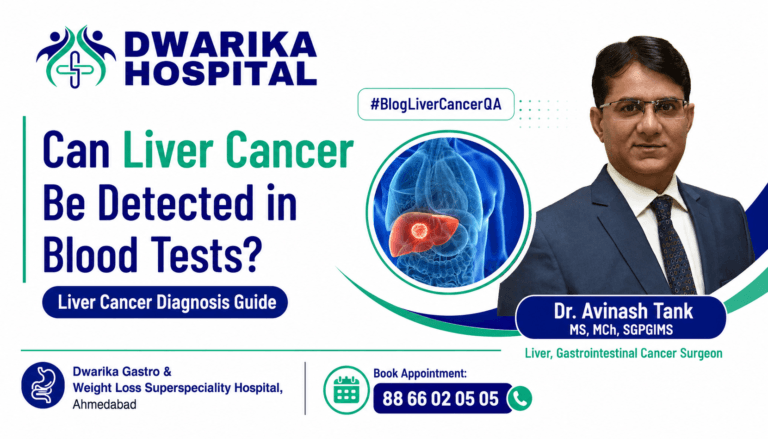 Liver CancerCan Liver Cancer Be Detected in Blood Tests?
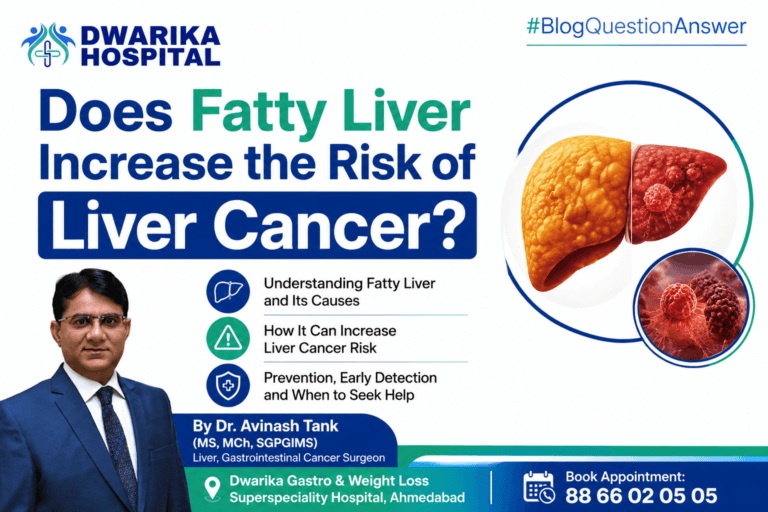 Liver CancerDoes Fatty Liver Increase the Risk of Liver Cancer?
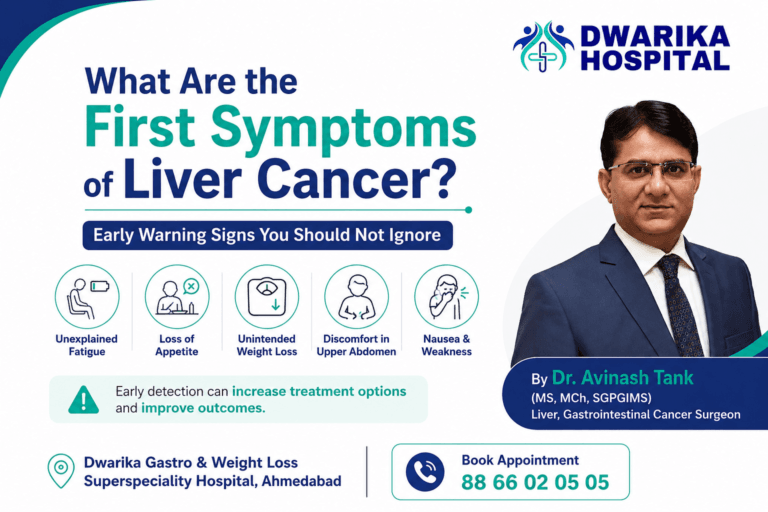 Liver CancerWhat Are the First Symptoms of Liver Cancer? Early Warning Signs You Should Not Ignore
Frequently asked questions
Established scarring is usually permanent, but treating the underlying cause early can halt progression and, in some cases, allow partial recovery of liver function.
Cirrhosis significantly raises the risk of liver cancer, so six-monthly surveillance scans help catch any tumour early, when it is still curable.
Vomiting blood, black stools, marked abdominal swelling, deep jaundice or confusion are warning signs that need urgent medical attention.
Transplantation is assessed when cirrhosis becomes advanced (decompensated) or when liver cancer develops within criteria that make transplant the best option.
Early liver cancer is potentially curable with surgical resection or transplantation, which is why surveillance in high-risk patients is so important.
People with hepatitis B or C, cirrhosis, heavy alcohol use or significant fatty liver disease are at higher risk and benefit from regular screening.
Yes. The liver can regenerate, so a healthy liver often tolerates removal of the cancerous portion when planned carefully by a specialist.
A short, structured check-in on your digestive symptoms — not a diagnosis. Answer honestly; we'll point you to the right information, and flag anything that needs prompt medical attention.
About 3 minutes · Free Start assessment →
Dr. Avinash Tank, MBBS · MS (General Surgery) · MCh (Surgical Gastroenterology, SGPGIMS)
SGPGIMS (India's premier GI centre) + advanced training in Japan & South Korea. Super-specialist gastrointestinal, bariatric & cancer surgeon treating liver conditions at Dwarika Hospital — Gastro, Bariatric & Laparoscopic Surgery Center.
Other Knowledge Centres
Have questions about your liver?
Book a confidential consultation with Dr. Avinash Tank — honest advice, same-week slots.