

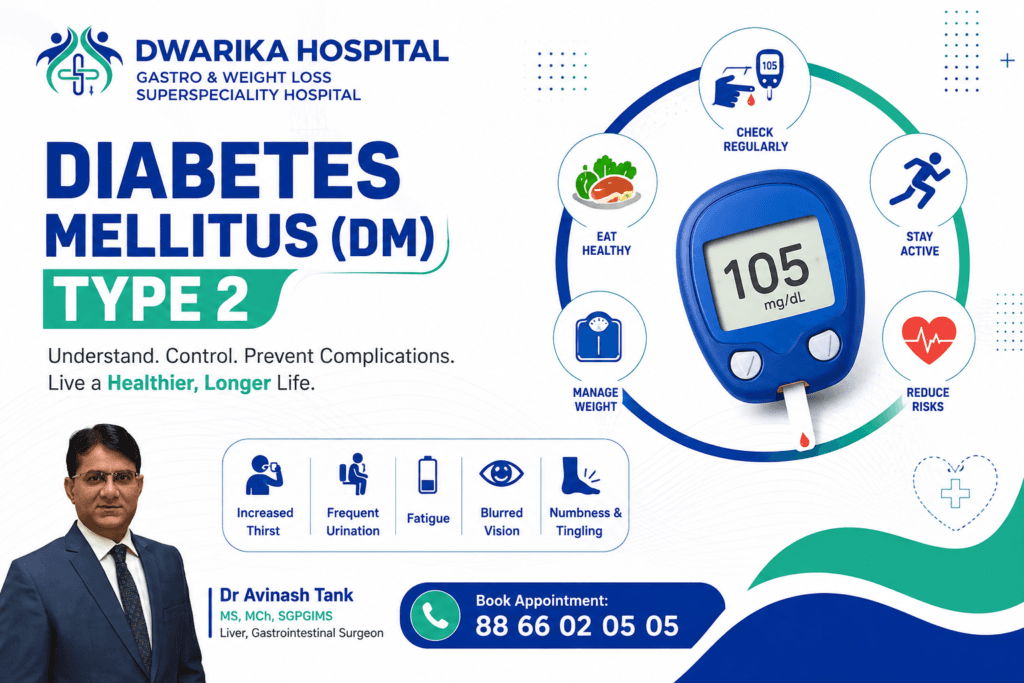
Dr. Avinash Tank, MS, MCh, SGPGIMS
Liver, Gastrointestinal, Bariatric & Metabolic Surgeon
Dwarika Gastro & Weight Loss Superspeciality Hospital, Ahmedabad
Quick Answer
Type 2 diabetes is a metabolic disease in which blood glucose remains higher than normal because the body develops insulin resistance and, over time, the pancreas may not produce enough insulin to overcome that resistance.
We do not look at diabetes as simply a “high sugar” problem.
When we evaluate a person with Type 2 diabetes, we also look for the underlying metabolic problems that commonly accompany it—overweight or obesity, abdominal/visceral fat, fatty liver, high blood pressure, abnormal cholesterol, kidney disease, cardiovascular risk and other diabetes-related complications.
This broader assessment becomes particularly important when a patient is planning surgery.
Before elective surgery, our objective is not merely to obtain a routine “fitness certificate.” We want to understand the patient’s metabolic condition, identify factors that could increase surgical risk, optimize them as much as reasonably possible, and develop a plan for glucose management before, during and after surgery.
What Exactly Is Type 2 Diabetes?
Type 2 diabetes develops primarily because of a combination of insulin resistance and progressive impairment of insulin secretion by the pancreas.
Insulin helps glucose move from the bloodstream into cells where it can be used for energy.
When insulin resistance develops, the body needs more insulin to maintain normal blood glucose. Initially, the pancreas may compensate by producing more insulin.
Over time, however, the pancreas may no longer be able to compensate adequately.
The result is persistent elevation of blood glucose.
This is why Type 2 diabetes is usually a progressive metabolic disorder rather than a sudden illness.
It is also why simply asking, “What is my sugar today?” does not give us the complete picture.
Why Does Type 2 Diabetes Develop?
There is no single cause.
Several factors can contribute:
- Genetic susceptibility
- Excess body weight
- Abdominal or visceral fat
- Physical inactivity
- Increasing age
- Unhealthy dietary patterns
- Family history
- Previous gestational diabetes
- Polycystic ovary syndrome
- Fatty liver and metabolic dysfunction
- High blood pressure
- Abnormal cholesterol and triglycerides
- Certain medications and medical conditions
Importantly, Type 2 diabetes can occur even in a person who does not appear overweight.
Body weight alone does not tell us how much visceral fat a person has or how much insulin resistance is present.
This is particularly relevant when evaluating Asian patients, who may develop metabolic disease at lower BMI levels than many Western populations.
How Do We Diagnose Type 2 Diabetes?
We start with the patient’s history and risk factors and then use appropriate blood tests.
The main diagnostic tests are:
HbA1c
HbA1c provides an estimate of average blood glucose exposure over approximately the previous 2–3 months.
An HbA1c of 6.5% or higher is one of the accepted diagnostic criteria for diabetes when measured using an appropriate standardized laboratory method.
Fasting Plasma Glucose
A fasting plasma glucose of 126 mg/dL or higher meets the diagnostic criterion for diabetes.
Oral Glucose Tolerance Test
A 2-hour plasma glucose of 200 mg/dL or higher following a 75-g oral glucose tolerance test meets the diagnostic criterion.
Random Plasma Glucose
A random plasma glucose of 200 mg/dL or higher, together with classic symptoms of hyperglycemia or hyperglycemic crisis, can establish the diagnosis.
If a person does not have unequivocal hyperglycemia, an abnormal result generally needs confirmation with repeat or additional testing.
We Do Not Diagnose Diabetes From One Number Alone
A common misconception is:
“My sugar was 160, therefore I have diabetes.”
It is not that simple.
The meaning of a glucose value depends on:
- Whether the patient was fasting
- When the test was performed
- What the patient had eaten
- Whether the patient was ill or under stress
- Which medication the patient is taking
- HbA1c
- Previous glucose measurements
- Symptoms
Similarly, an HbA1c result needs to be interpreted in the appropriate clinical context.
Conditions affecting red blood cells, haemoglobin or red-cell turnover can sometimes make HbA1c less reliable. In such situations, plasma glucose testing may be more appropriate.
Our approach is therefore to diagnose the patient—not merely the laboratory report.
What Is Prediabetes?
Prediabetes is an intermediate metabolic state in which blood glucose is higher than normal but has not reached the diagnostic range for diabetes.
Typical criteria include:
- HbA1c 5.7–6.4%
- Fasting plasma glucose 100–125 mg/dL
- 2-hour OGTT glucose 140–199 mg/dL
Prediabetes is important because it signals increased metabolic risk and an opportunity for intervention before established diabetes develops.
When we identify prediabetes, we do not simply tell the patient to “watch the sugar.”
We assess the patient’s weight, waist circumference, lifestyle, family history and other metabolic risk factors and decide what intervention is appropriate.
Why Do We Look at Weight and Waist Along With Blood Sugar?
Because diabetes and obesity are frequently part of the same metabolic process.
A person may have:
Excess visceral fat → insulin resistance → increased insulin production → worsening metabolic dysfunction → Type 2 diabetes
This is why two people with the same HbA1c may require completely different management strategies.
For a person with Type 2 diabetes and obesity, we assess:
- BMI
- Waist circumference
- Weight trajectory
- Distribution of body fat
- Diet
- Physical activity
- Previous attempts at weight loss
- Diabetes duration
- Diabetes medications
- Associated metabolic diseases
Current ADA guidance considers weight management a primary treatment goal alongside glucose management in people with diabetes and overweight or obesity.
Why Do We Assess the Liver in a Patient With Type 2 Diabetes?
The liver is central to glucose metabolism.
Insulin normally helps regulate glucose production by the liver. When insulin resistance develops, the liver may continue producing excessive glucose.
At the same time, metabolic dysfunction can lead to accumulation of fat in the liver.
Therefore, Type 2 diabetes, visceral obesity and fatty liver often occur together.
When appropriate, we assess:
- Liver enzymes
- Liver imaging
- Metabolic risk factors
- Other causes of liver disease
- Evidence suggesting advanced liver disease
A patient may therefore come to us because of diabetes and discover that the more important underlying problem is obesity-associated metabolic disease involving both the liver and pancreas.
Why Do We Look for Other Diabetes-Related Problems?
Type 2 diabetes can affect multiple organs over time.
Depending on the patient’s age, diabetes duration, symptoms and risk factors, assessment may include evaluation of:
- Blood pressure
- Cholesterol and triglycerides
- Kidney function
- Urine albumin
- Cardiovascular risk
- Eye health
- Nerve function
- Foot health
- Liver health
- Nutritional status
The purpose is not to order every possible test for every patient.
The investigations should answer clinical questions and help us decide what treatment is appropriate.
How Do We Keep Type 2 Diabetes Under Control?
Diabetes management is individualized.
There are usually several components.
1. Nutrition
We assess what the patient is actually eating rather than simply giving a generic “diabetic diet.”
The dietary plan may need to address:
- Total calorie intake
- Refined carbohydrates
- Sugary foods and beverages
- Protein intake
- Fibre
- Meal timing
- Portion size
- Alcohol intake where relevant
- Eating behaviour
- Food preferences and sustainability
The objective is a diet that the patient can realistically follow for the long term.
2. Physical Activity
Regular physical activity improves insulin sensitivity and supports weight management.
The appropriate exercise plan depends on:
- Age
- Fitness
- Body weight
- Joint problems
- Cardiovascular status
- Diabetes complications
- Other medical conditions
A patient who has been sedentary for years should not suddenly begin an extreme exercise programme.
The programme should be safe, progressive and sustainable.
3. Weight Management
For patients with overweight or obesity, controlling diabetes without addressing excess weight may leave an important part of the problem untreated.
Weight reduction can improve insulin sensitivity and glucose control and may reduce the need for diabetes medication.
Greater sustained weight loss can produce larger metabolic benefits, and some patients may achieve diabetes remission.
Therefore, we ask an important question:
Is the patient’s diabetes primarily being managed as a glucose problem, or are we also treating the metabolic disease driving the glucose problem?
What About Diabetes Medicines?
Medicines are an important part of Type 2 diabetes management when indicated.
The appropriate treatment depends on the individual patient’s:
- HbA1c
- Blood glucose pattern
- Weight
- Kidney function
- Cardiovascular risk
- Liver disease
- Other medical conditions
- Current medicines
- Risk of hypoglycemia
- Treatment goals
There is no single “best diabetes medicine” for everyone.
Medicines may need to be changed over time because Type 2 diabetes itself can change.
A patient should never stop insulin or diabetes medicines without medical advice, particularly before an operation.
Can Type 2 Diabetes Go Into Remission?
Yes, in some patients.
We prefer the medically accurate term “diabetes remission” rather than “permanent reversal” or “cure.”
An international expert consensus defines remission as an HbA1c below 6.5% that persists for at least three months without glucose-lowering medication.
Remission is more achievable in some patients than others.
Important factors include:
- Duration of diabetes
- Amount of excess weight
- Degree of insulin resistance
- Remaining pancreatic beta-cell function
- Age
- Magnitude and durability of weight loss
- Treatment used
Remission does not mean that the person can forget about diabetes forever.
Metabolic disease can return, particularly if significant weight regain occurs.
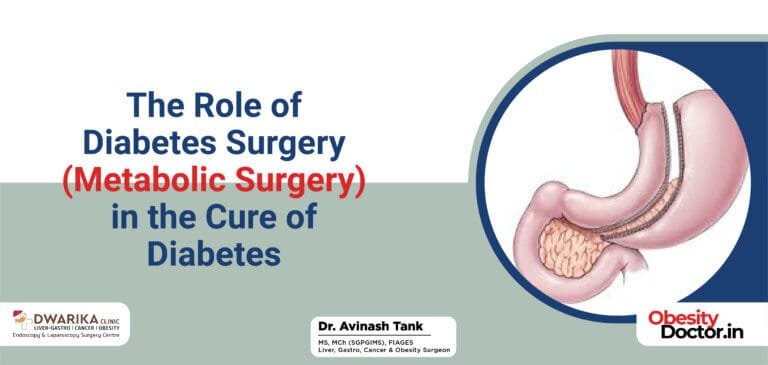
When Do We Consider Metabolic Surgery?
For appropriately selected patients with Type 2 diabetes and obesity, metabolic surgery can be an important treatment option.
Current ADA 2026 guidance recommends considering metabolic surgery as a weight and glycemic management approach for people with Type 2 diabetes and BMI ≥30 kg/m², or ≥27.5 kg/m² in Asian American individuals, when they are otherwise appropriate surgical candidates.
The decision is individualized.
We consider:
- BMI and waist circumference
- Duration of diabetes
- HbA1c
- Diabetes medicines
- Degree of obesity
- Previous weight-loss attempts
- Fatty liver
- Cardiovascular and kidney status
- Nutritional status
- Surgical fitness
- Patient expectations
- Ability to follow long-term nutritional and medical follow-up
Metabolic surgery should not be presented as a shortcut.
It is a major metabolic intervention requiring careful selection, preparation and long-term follow-up.
Why Is Diabetes Control Particularly Important Before Surgery?
This is one of the most important questions we discuss with patients.
Surgery itself creates a physiological stress response.
During and after an operation, stress hormones can increase blood glucose even in a patient whose diabetes was previously reasonably controlled.
High blood glucose around the time of surgery is associated with increased risk of postoperative infection and other adverse outcomes.
This is why we do not treat pre-operative diabetes assessment as a formality.
We want to know:
How well controlled is the diabetes today?
But also:
How stable is the patient’s glucose control, what medicines are being used, and what other conditions could affect the operation and recovery?
What Do We Check Before Elective Surgery in a Patient With Diabetes?
The exact evaluation depends on the type and urgency of surgery.
In an elective major operation, we commonly review:
- Recent HbA1c
- Blood glucose pattern
- Diabetes duration
- Current diabetes medicines
- Insulin use, if applicable
- Kidney function
- Electrolytes
- Cardiovascular risk
- Blood pressure
- Weight and nutritional status
- Liver status when relevant
- Previous diabetes complications
- Previous surgical history
- Overall anaesthetic and surgical fitness
For patients undergoing elective surgery, the ADA 2026 Standards recommend a pre-operative HbA1c goal of <8% within the preceding three months, with individualized risk-benefit assessment.
This does not mean that every patient with an HbA1c above 8% automatically cannot undergo surgery.
The urgency and type of surgery, overall health, risks of delaying the operation and ability to optimize diabetes must all be considered.
Why Don’t We Try to Make Blood Sugar “Perfect” Before Surgery?
Because excessively aggressive glucose lowering can also be dangerous.
The goal is safe and controlled glucose management, not simply the lowest possible glucose number.
The ADA 2026 Standards recommend perioperative blood glucose generally in the range of 100–180 mg/dL, while emphasizing individualized care and avoidance of hypoglycemia.
Therefore:
Too high is a problem.
Too low is also a problem.
Good perioperative diabetes management is about finding the safe range and maintaining it appropriately.
What Happens to Diabetes Medicines Around Surgery?
The medication plan depends on the individual drug, type of surgery, fasting status, kidney function and other factors.
Some medicines need to be withheld or adjusted before surgery.
For example, SGLT2 inhibitors require special perioperative planning because of the risk of euglycemic diabetic ketoacidosis.
Insulin may also require dose adjustment because the patient will be fasting.
Therefore, patients should receive specific instructions from the surgical/anaesthesia/diabetes team rather than independently stopping or continuing medicines.
During surgery, continuous glucose monitoring should not be relied upon as the sole method of glucose monitoring.
Why Does Diabetes Matter After Surgery?
The operation is only one part of the patient’s journey.
The early postoperative period involves:
- Surgical stress
- Changes in food intake
- Reduced physical activity
- Changes in medicines
- Fluid shifts
- Changes in insulin requirements
- Risk of infection
- Wound healing
Therefore, glucose management continues after the operation.
Depending on the surgery, we may monitor glucose regularly and modify diabetes medicines as oral intake changes.
The patient’s nutritional needs also become important, particularly after gastrointestinal, bariatric or metabolic surgery.
Can Diabetes Affect Wound Healing and Recovery?
Poorly controlled diabetes can increase the risk of postoperative infection and may adversely affect recovery.
This does not mean that a person with diabetes cannot undergo major surgery.
It means that diabetes needs to be recognized as one of the factors that can influence surgical risk.
Good pre-operative optimization, appropriate perioperative glucose management, nutrition, mobilization, wound care and early recognition of complications are all important.
What Complications Do We Watch for After Surgery?
Postoperative complications are not caused by diabetes alone.
However, diabetes can contribute to risk in some patients.
We remain alert for problems such as:
- Surgical-site infection
- Delayed wound healing
- Persistent hyperglycemia
- Hypoglycemia
- Dehydration
- Nutritional problems
- Blood clots
- Respiratory complications
- Cardiovascular events
- Other procedure-specific complications
The important principle is:
A complication should be identified early rather than attributed automatically to “diabetes.”
Persistent fever, increasing wound redness or discharge, severe pain, repeated vomiting, breathing difficulty, chest pain, confusion or significant glucose abnormalities require prompt medical assessment.
Diabetes, Obesity, Liver Disease and Cancer: Why We Look at the Whole Patient
One of the biggest mistakes in metabolic medicine is to treat every diagnosis separately.
A patient may have:
Visceral obesity
↓
Insulin resistance
↓
Type 2 diabetes
↓
Fatty liver / metabolic liver disease
along with increased cardiovascular risk.
Obesity and metabolic dysfunction may also overlap with the risk factors associated with several cancers.
This does not mean that diabetes automatically causes cancer.
It means that the combination of metabolic disease, obesity, fatty liver and other risk factors deserves a comprehensive assessment.
Therefore, when appropriate, our evaluation extends beyond blood glucose.
Our Approach: We Treat the Metabolic Problem, Not Just the Sugar
When a patient comes to us with Type 2 diabetes, our questions are not limited to:
“What is your sugar?”
We want to understand:
- Why did diabetes develop?
- How long has the patient had diabetes?
- How well controlled is it?
- Is there significant insulin resistance?
- Is there abdominal or visceral obesity?
- Is fatty liver present?
- Is kidney function normal?
- Is there cardiovascular risk?
- Are there existing diabetes complications?
- What medicines are being used?
- Is weight loss required?
- Is metabolic surgery appropriate?
- If surgery is planned, can the patient’s metabolic condition be optimized beforehand?
This approach helps us create a treatment plan around the whole patient rather than a single laboratory value.
What Should a Person With Type 2 Diabetes Do?
If you have Type 2 diabetes, do not focus only on the glucose number.
Understand your complete metabolic health.
Discuss with your doctor:
- HbA1c and glucose control
- Weight and waist circumference
- Blood pressure
- Cholesterol and triglycerides
- Kidney function
- Liver health
- Cardiovascular risk
- Eye and nerve complications where appropriate
- Nutrition and physical activity
- Weight-management options if overweight or obese
- Whether diabetes remission is a realistic goal
- Whether metabolic surgery should be considered when appropriate
- Pre-operative optimization if surgery is planned
Frequently Asked Questions
What is Type 2 diabetes?
Type 2 diabetes is a metabolic disease characterized by persistent hyperglycemia, usually involving insulin resistance together with progressive impairment of insulin secretion.
What HbA1c confirms diabetes?
An HbA1c of 6.5% or higher meets the diagnostic criterion when measured using an appropriate standardized laboratory method. In the absence of unequivocal hyperglycemia, confirmation is generally required.
Can a person with normal weight have Type 2 diabetes?
Yes. Type 2 diabetes can occur in people without obvious obesity. Visceral fat, genetics, age and insulin resistance can contribute.
Can weight loss improve Type 2 diabetes?
Yes. Weight loss can improve insulin sensitivity and glycemic control and may reduce the need for diabetes medication. Greater sustained weight loss may provide greater metabolic benefits.
Can Type 2 diabetes go into remission?
Yes, some patients can achieve remission. However, remission is not the same as guaranteed permanent cure and requires continued follow-up.
Why should HbA1c be checked before surgery?
HbA1c helps us understand longer-term glucose control and identify patients who may benefit from pre-operative optimization. Current ADA guidance recommends a pre-operative HbA1c goal below 8% for elective surgery, with individualized assessment.
Can diabetes prevent someone from having surgery?
Not necessarily. Diabetes increases certain risks, but many people with diabetes safely undergo surgery. The important issue is appropriate risk assessment and optimization.
What blood sugar is targeted around surgery?
The ADA 2026 Standards recommend maintaining perioperative blood glucose generally between 100 and 180 mg/dL, while avoiding hypoglycemia and individualizing targets.
Is metabolic surgery the same as weight-loss surgery?
The terms bariatric surgery, weight-loss surgery and metabolic surgery are sometimes used interchangeably. “Metabolic surgery” emphasizes that these procedures can improve metabolic diseases such as Type 2 diabetes in appropriately selected patients.
Should I stop my diabetes medicines before surgery?
Do not make this decision yourself. Some medicines need to be stopped or adjusted before surgery, while others may need to be continued or replaced temporarily. The plan should be individualized by the treating team.
The Most Important Message
Type 2 diabetes should not be managed as a number on a glucose meter.
It is a metabolic disease that can affect the pancreas, liver, kidneys, blood vessels, nerves and overall surgical fitness.
When we evaluate a patient, we therefore look beyond the blood sugar.
We assess the patient’s weight, visceral obesity, liver health, cardiovascular risk, kidney function, diabetes complications, medications, nutritional status and overall fitness.
If surgery is planned, this assessment becomes even more important.
Our objective before surgery is to enter the operation with the patient’s metabolic condition as stable and optimized as reasonably possible, because good preparation can contribute to safer perioperative glucose management and recovery.
And after surgery, diabetes management does not stop. It evolves with the patient’s recovery, nutrition, activity, weight and overall metabolic health.
For selected patients with obesity-associated Type 2 diabetes, the long-term goal may go beyond simply controlling blood glucose. Substantial and sustained weight loss—and, in appropriately selected patients, metabolic surgery—may provide an opportunity for diabetes remission.
The right question is therefore not only, “How do I control my sugar?”
It is:
“Why did I develop diabetes, what other metabolic problems do I have, and what is the best long-term strategy to protect my health?”
Medical Disclaimer
This article is intended for patient education and general information. Diabetes treatment, medication changes and decisions regarding surgery must be individualized after clinical evaluation. Patients should not stop insulin or other glucose-lowering medicines without medical advice.
Medical review: Dr. Avinash Tank, MS, MCh, SGPGIMS
Liver, Gastrointestinal, Bariatric & Metabolic Surgeon
Dwarika Gastro & Weight Loss Superspeciality Hospital, Ahmedabad
Was this article helpful?

Super-specialist GI, bariatric & cancer surgeon. SGPGIMS (India's premier GI centre) + advanced training in Japan & South Korea. Read full profile →
Last reviewed: July 2026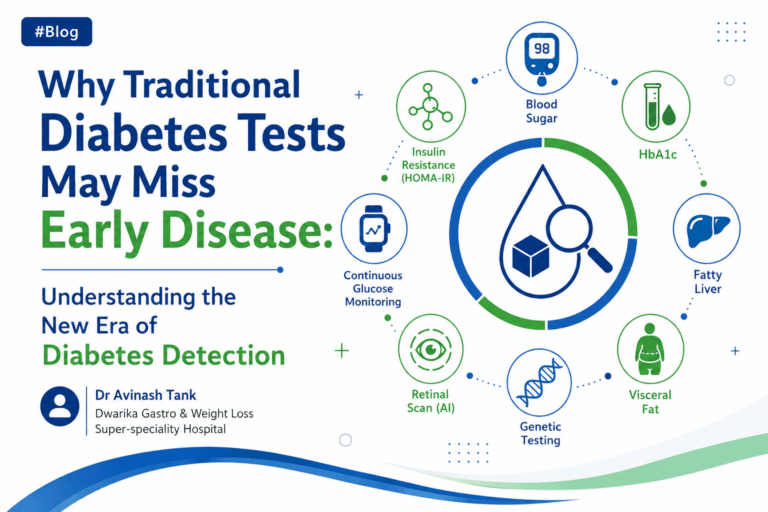


Comments
Be the first to share your thoughts on this article.