

Safeguard your liver; get vaccinated
As printedHealthy, hygienic habits and vaccination can keep you away from Hepatitis A, writes liver and gastro surgeon Avinash Kumar Tank
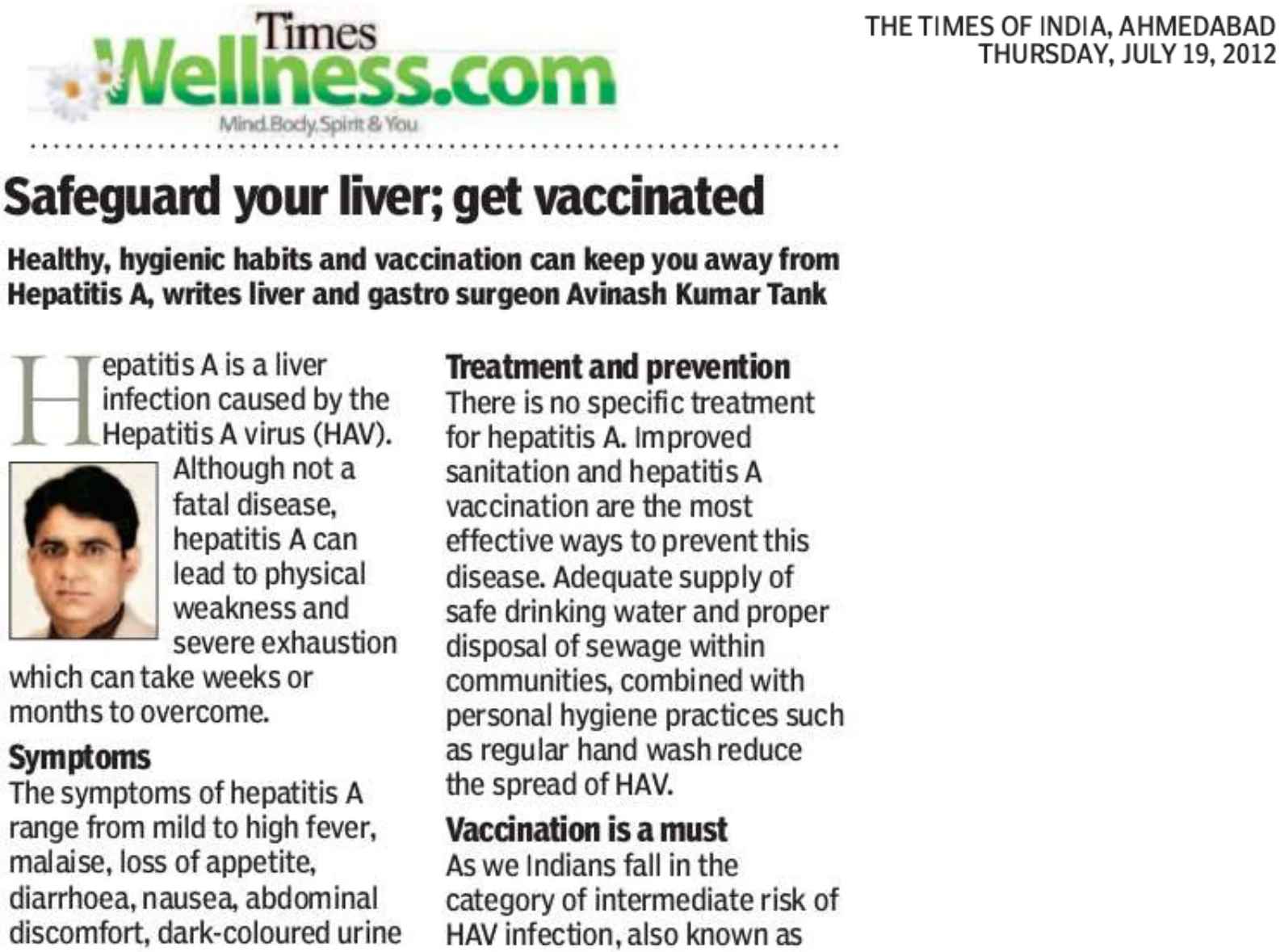
Historical publication record, shown exactly as printed. Select the clipping to read it full size.
What this article covers
Dr. Tank explains that hepatitis A is a liver infection caused by the hepatitis A virus (HAV) and, although not a fatal disease, can bring weakness and severe exhaustion that take weeks or months to overcome. The column describes the symptoms, notes that there is no specific treatment, and sets out prevention: safe drinking water, proper sewage disposal, hand-washing and vaccination — which it calls a must, since Indians fall in the intermediate-risk category for HAV infection.
A factual summary of the printed article above. Below: the article as printed, then an up-to-date patient guide on the same topic.
The article, as printed
Hepatitis A is a liver infection caused by the Hepatitis A virus (HAV). Although not a fatal disease, hepatitis A can lead to physical weakness and severe exhaustion which can take weeks or months to overcome.
Symptoms
The symptoms of hepatitis A range from mild to high fever, malaise, loss of appetite, diarrhoea, nausea, abdominal discomfort, dark-coloured urine …
Treatment and prevention
There is no specific treatment for hepatitis A. Improved sanitation and hepatitis A vaccination are the most effective ways to prevent this disease. Adequate supply of safe drinking water and proper disposal of sewage within communities, combined with personal hygiene practices such as regular hand wash reduce the spread of HAV.
Vaccination is a must
As we Indians fall in the category of intermediate risk of HAV infection, also known as …
The scan preserved on this page ends mid-sentence; the rest of the column is not part of the clipping.
The newspaper piece above is a 2012 record. What follows is a present-day guide to Hepatitis A for patients and families, based on current medical practice.
What is hepatitis A?
Hepatitis A is a short-lived (acute) infection of the liver caused by the hepatitis A virus. The virus inflames liver cells, which is why people feel unwell, lose their appetite and often turn yellow (jaundice).
Unlike hepatitis B and C, hepatitis A never becomes a long-term (chronic) infection. Almost everyone recovers completely, and one infection gives lifelong immunity. The illness can still be tiring and disruptive: many adults need several weeks off work or college.
How does hepatitis A spread?
Hepatitis A spreads by the faecal–oral route: the virus leaves the body in the stool of an infected person and enters another person through the mouth. In everyday life that usually means:
- Drinking water, ice or juice contaminated with sewage
- Eating raw or undercooked food, cut fruit, salads or street food handled with unwashed hands
- Close contact with an infected person in the same household, hostel or school
- Eating shellfish from polluted water
It is not spread by coughing or sneezing. An infected person is most contagious in the one to two weeks before jaundice appears — which is why outbreaks move through families and schools before anyone realises.
Symptoms of hepatitis A
Symptoms usually start two to six weeks after the virus is swallowed. Young children often have no symptoms at all; adults and teenagers usually do, and they tend to be more severe with age.
- Fever, tiredness and a general feeling of being unwell
- Loss of appetite, nausea and vomiting
- Discomfort or pain in the upper right side of the abdomen
- Dark, tea-coloured urine and pale, clay-coloured stools
- Yellowing of the eyes and skin (jaundice), sometimes with itching
- Diarrhoea, especially in children
Most people feel better within a few weeks, but fatigue can linger for a month or two. Around one in ten people have a relapse of symptoms before recovering fully.
When hepatitis A needs urgent attention
Rarely, hepatitis A causes acute liver failure. The risk is higher in older adults and in anyone who already has liver disease (for example fatty liver, hepatitis B or C, or alcohol-related liver disease). Go to hospital the same day if there is:
- Confusion, unusual drowsiness or change in behaviour
- Bleeding or bruising easily, or vomiting blood
- Vomiting that stops you keeping fluids down
- Jaundice that keeps deepening after the first week
- Swelling of the abdomen or legs
How is hepatitis A diagnosed?
A blood test for IgM anti-HAV antibodies confirms a recent hepatitis A infection. Liver function tests (bilirubin, SGPT/ALT, SGOT/AST) show how inflamed the liver is, and a prothrombin time/INR shows whether the liver is still making clotting proteins normally — the key test for spotting severe disease early. An ultrasound is sometimes done to rule out other causes of jaundice such as gallstones blocking the bile duct.
Treatment and recovery
There is no antiviral medicine for hepatitis A; the body clears the virus by itself. Care is supportive:
- Rest as much as you need to — return to activity gradually
- Drink plenty of fluids, especially if vomiting or having diarrhoea
- Eat small, frequent, normal meals; no special "jaundice diet" is needed
- Avoid alcohol completely until liver tests return to normal
- Do not take painkillers, herbal or "liver tonic" remedies without asking your doctor — several can harm an inflamed liver
- Keep follow-up blood tests until the liver readings settle
Prevention: hygiene and vaccination
Clean water, safe sanitation and hand-washing with soap after using the toilet, after changing nappies and before preparing or eating food are the foundations of prevention. When travelling or eating out, prefer freshly cooked hot food and sealed or boiled water.
The hepatitis A vaccine is safe and highly effective. The inactivated vaccine is given as two doses six to twelve months apart; a live attenuated vaccine given as a single dose is also available in India. Your doctor can advise which is suitable.
- Children (commonly from one year of age)
- Adults with long-term liver disease, including fatty liver and hepatitis B or C
- Food handlers, hostel residents and people working in child care
- Travellers and anyone who has never had hepatitis A
As living standards improve, fewer children in India catch hepatitis A early in life — when it is usually mild — and more people meet the virus for the first time as adults, when it is more severe. That shift is the reason vaccination matters more now, not less.
Key takeaways
- Hepatitis A is an acute liver infection spread through contaminated food and water; it does not become chronic.
- Adults usually have fever, nausea, dark urine and jaundice; recovery can take weeks.
- There is no specific antiviral treatment — rest, fluids and avoiding alcohol and unnecessary medicines.
- Confusion, bleeding or deepening jaundice need same-day hospital care.
- Hand hygiene, safe water and the hepatitis A vaccine prevent it.
Frequently asked questions
Is hepatitis A dangerous?
For most people it is an unpleasant but self-limiting illness that clears completely. A small number of people — mostly older adults and those with existing liver disease — can develop liver failure, which is why warning signs such as confusion or bleeding need urgent care.
How long does hepatitis A last?
Symptoms typically last a few weeks. Tiredness and weakness can continue for one to two months, and a minority of people have a relapse before recovering fully.
Can you get hepatitis A twice?
No. After recovery the body develops lifelong immunity to hepatitis A.
What should I eat during hepatitis A?
Small, frequent, balanced meals that you can tolerate, with plenty of fluids. There is no need to avoid all fat or turmeric; the most important points are to avoid alcohol and not to take unprescribed medicines or herbal remedies.
Who should get the hepatitis A vaccine?
Children, adults who have never had the infection, travellers, food handlers and anyone with chronic liver disease. A blood test can check immunity in adults before vaccinating.
Is hepatitis A the same as hepatitis B?
No. Hepatitis A spreads through food and water and never becomes chronic. Hepatitis B spreads through blood and body fluids and can cause long-term liver damage.
Read next
This page is for general information and does not replace a personal consultation. If you have symptoms, please see a doctor.

More from Dr. Avinash Tank in the press
 DNA · Jul 2011Hepatitis B afflicts 3.4% Gujaratis
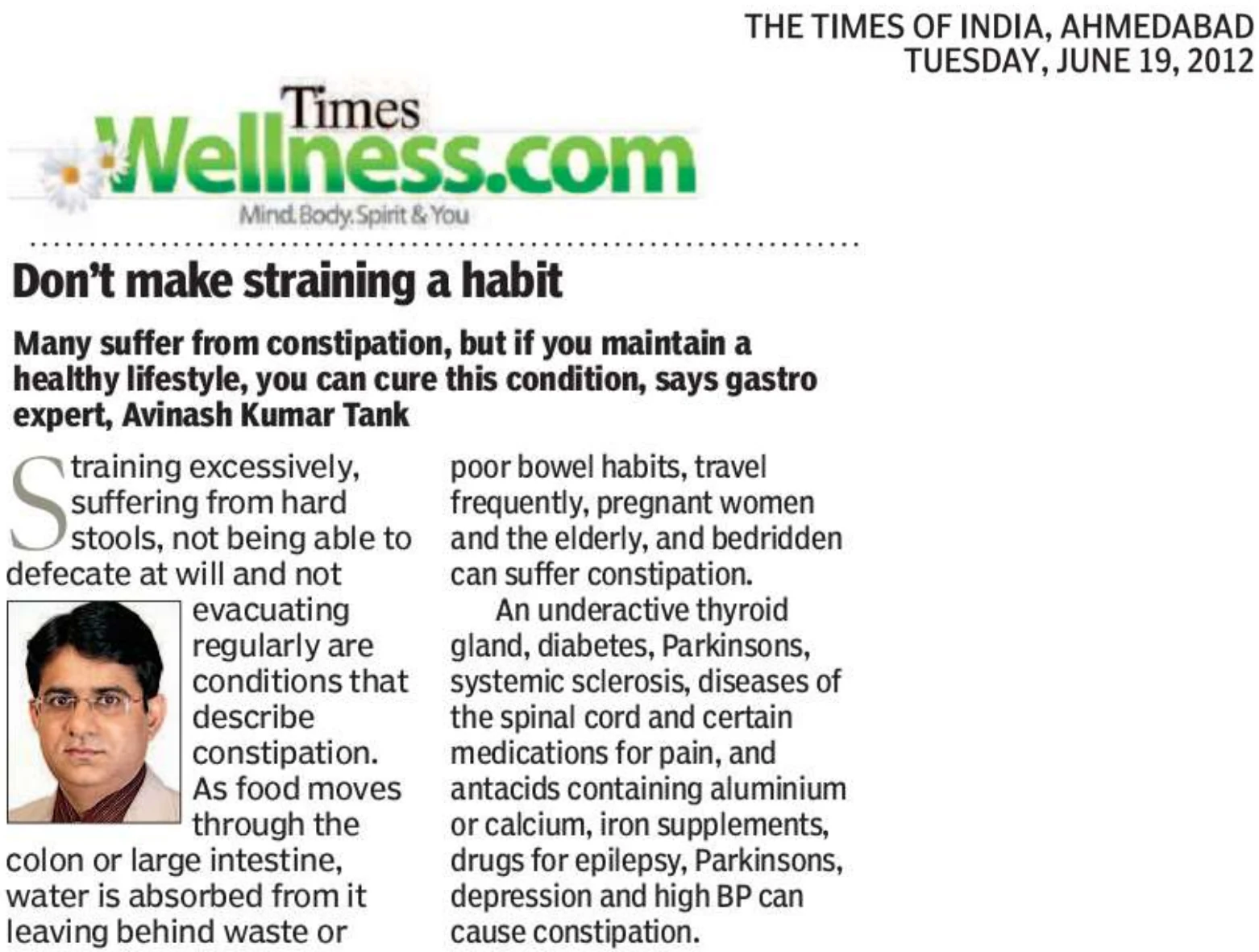 The Times of India · Jun 2012Don’t make straining a habit
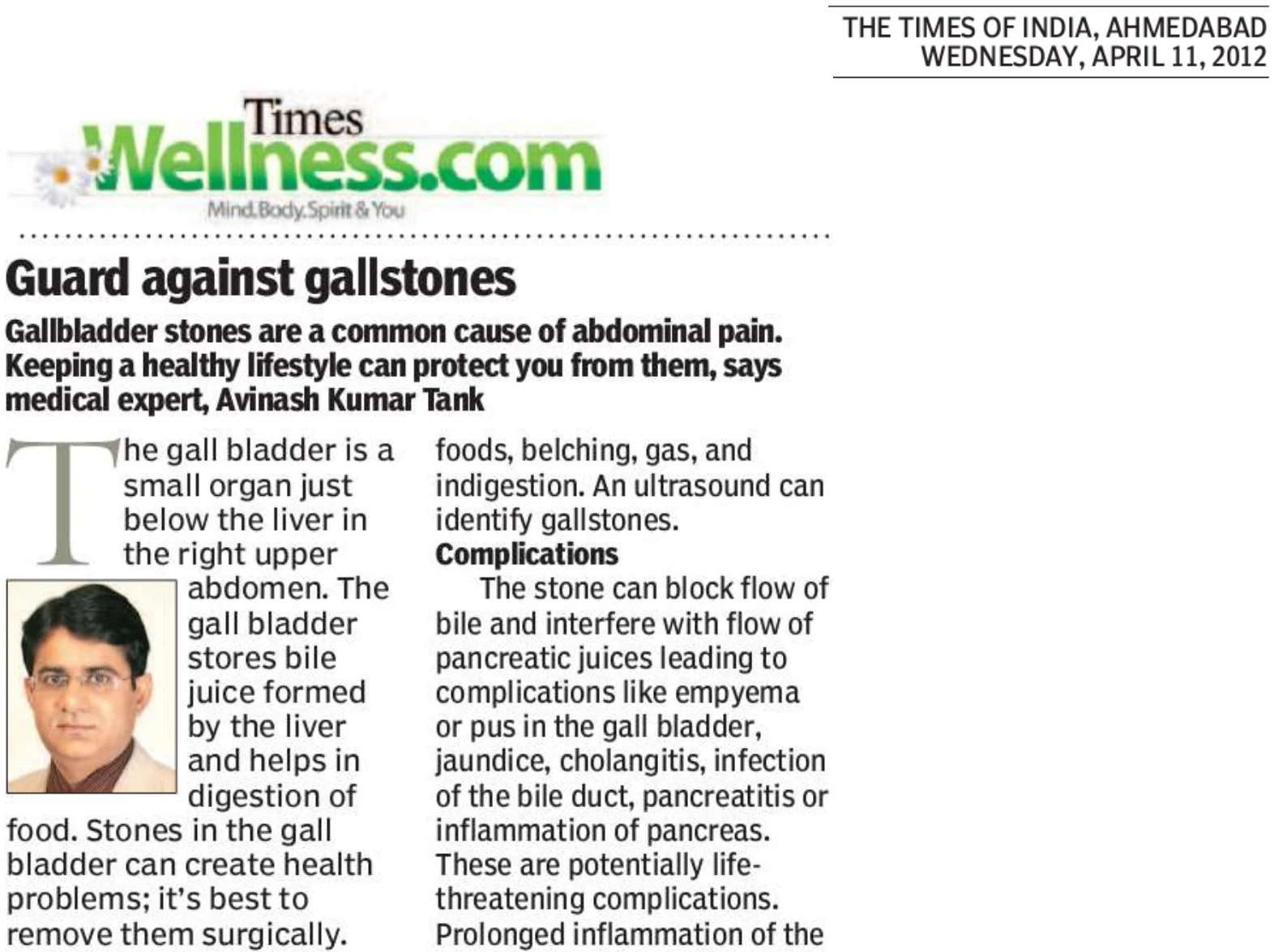 The Times of India · Apr 2012Guard against gallstones
Have a question about digestive, liver or GI health?
Get a clear, personalised answer from Dr. Avinash Tank and the clinical team — confidentially, with same-week slots.