

What Is the Survival Rate for Pancreatic Cancer?
Featured Snippet Answer
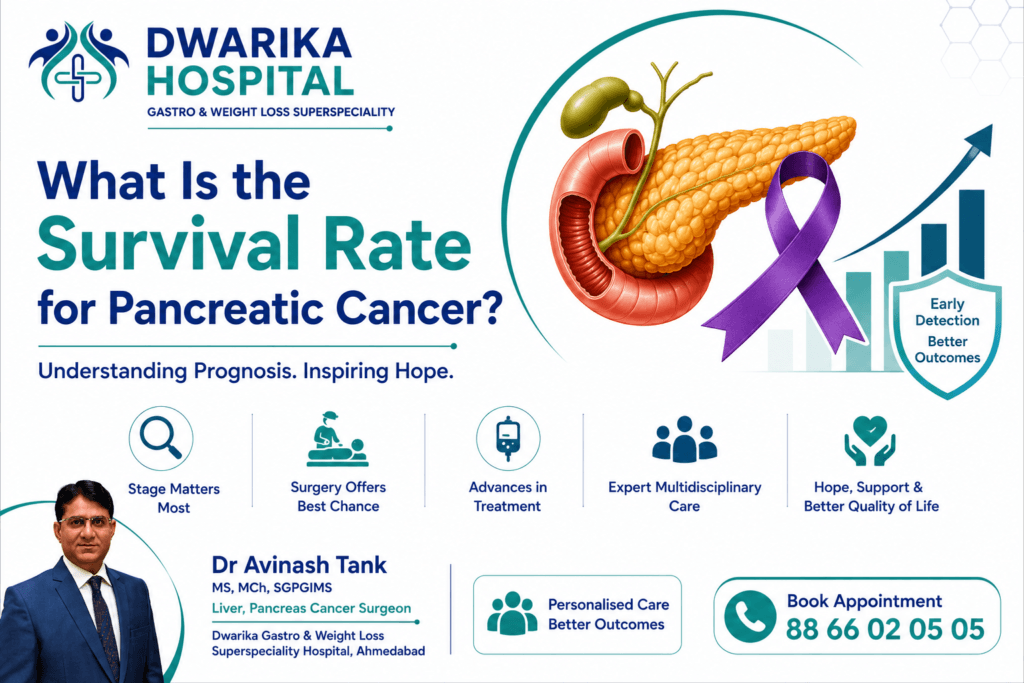
The survival rate for pancreatic cancer depends largely on how early the cancer is diagnosed and whether it can be completely removed by surgery.
Patients with early-stage, resectable pancreatic cancer generally have a better outlook than those whose cancer has spread to nearby blood vessels or distant organs.
Modern treatments—including surgery, chemotherapy, and multidisciplinary care—have steadily improved survival over the past decade.
However, survival statistics describe large groups of patients and cannot accurately predict what will happen to any one individual. Your prognosis depends on several factors, including the stage of the cancer, tumour biology, overall health, response to treatment, and the expertise of the treating team.
Why Patients Ask This Question
One of the first questions after being diagnosed with pancreatic cancer is:
“How long can I live?”
Patients and their families naturally want to understand what the future may hold. They often search online for survival rates, hoping to find clear answers.
Unfortunately, survival statistics can be confusing and frightening because they often combine patients with different stages of disease, ages, treatments, and health conditions. Some online figures may also be based on data collected several years ago and may not reflect recent advances in pancreatic cancer care.
The most important point to remember is that survival statistics describe populations—not individuals. Every patient’s journey is unique, and many factors influence prognosis.
The Short Answer
The survival rate for pancreatic cancer varies according to:
- Stage at diagnosis
- Whether surgery is possible
- Complete removal of the tumour
- Response to chemotherapy
- Lymph node involvement
- Overall health and nutrition
- Tumour biology
Patients diagnosed with localized, surgically removable pancreatic cancer have the best chance of long-term survival, while advanced cancers that have spread are more challenging to treat.
Understanding the Background
Pancreatic cancer is often diagnosed at a later stage because early symptoms are usually mild or absent. As a result, many patients have disease that has already spread beyond the pancreas when it is first detected.
Doctors estimate prognosis using the stage of the cancer, which describes how far the tumour has grown.
Broadly, pancreatic cancer can be classified as:
- Resectable (localized): Cancer is confined to the pancreas and can be removed surgically.
- Borderline resectable: Limited involvement of nearby blood vessels; chemotherapy may be given before surgery.
- Locally advanced: Extensive involvement of nearby blood vessels without distant spread.
- Metastatic: Cancer has spread to distant organs such as the liver, lungs, or peritoneum.
As the stage advances, treatment becomes more complex and the likelihood of long-term survival decreases. This is why early diagnosis remains one of the most important factors influencing outcome.
Detailed Answer
Why Stage Is the Most Important Predictor
The stage of pancreatic cancer has the greatest impact on survival.
| Stage | Typical Treatment | Overall Outlook |
|---|---|---|
| Localized (Resectable) | Surgery + Chemotherapy | Best chance of long-term survival |
| Borderline Resectable | Chemotherapy → Surgery (selected patients) | Better than advanced disease |
| Locally Advanced | Chemotherapy ± Radiation | Variable; surgery possible in selected cases after treatment |
| Metastatic | Systemic chemotherapy and supportive care | Focus on disease control and quality of life |
Patients diagnosed before the cancer spreads have significantly more treatment options.
How Surgery Improves Survival
Surgery is currently the only treatment with curative intent for pancreatic cancer.
Patients who undergo:
- Complete tumour removal (R0 resection)
- Appropriate chemotherapy
- Regular follow-up
generally have the most favourable long-term outcomes.
However, surgery is suitable only for carefully selected patients whose cancer has not spread beyond the pancreas or nearby reconstructable blood vessels.
Other Factors That Influence Survival
Survival depends on much more than stage alone.
Tumour Factors
- Tumour size
- Lymph node involvement
- Surgical margin status
- Tumour grade
- Biological behaviour
Patient Factors
- Age
- General fitness
- Nutritional status
- Diabetes control
- Other medical conditions
Treatment Factors
- Early diagnosis
- Multidisciplinary care
- Modern chemotherapy
- Treatment at experienced HPB centres
- Completion of planned therapy
Why Survival Statistics Do Not Predict Individual Outcomes
Many patients worry after reading survival statistics online.
It is important to understand that these numbers:
- Are averages from thousands of patients.
- Often include people treated many years ago.
- Do not account for newer chemotherapy regimens or improved surgical techniques.
- Cannot predict an individual’s response to treatment.
Two patients with the same stage of pancreatic cancer may have very different outcomes depending on tumour biology and response to therapy.
Have Survival Rates Improved?
Yes.
Over the past decade, survival has improved because of:
- Earlier diagnosis in selected patients.
- Better CT and MRI imaging.
- Endoscopic Ultrasound (EUS) for accurate staging.
- More effective chemotherapy regimens such as FOLFIRINOX and gemcitabine-based combinations.
- Improved anaesthesia and surgical techniques.
- Better postoperative care.
- Treatment by specialised multidisciplinary teams.
Although pancreatic cancer remains challenging, advances continue to improve outcomes.
Can Some Patients Live for Many Years?
Yes.
Long-term survival is possible, particularly for patients who:
- Have localized disease.
- Undergo complete surgical removal.
- Receive recommended chemotherapy.
- Remain cancer-free on follow-up.
Some patients achieve prolonged disease-free survival, demonstrating that pancreatic cancer is not always rapidly fatal.
What Can Patients Do to Improve Their Outlook?
While patients cannot change the biology of the tumour, they can optimise factors that influence recovery and treatment.
Helpful measures include:
- Seeking specialist evaluation without delay.
- Completing recommended chemotherapy.
- Maintaining good nutrition.
- Staying physically active as tolerated.
- Controlling diabetes and other medical conditions.
- Attending regular follow-up appointments.
- Seeking emotional and psychological support.
These steps improve overall health and help patients tolerate treatment more effectively.
What Current Evidence Shows
Current guidelines from NCCN, ASCO, and ESMO recommend that prognosis should be discussed individually rather than relying solely on published survival statistics. Surgical removal of localized pancreatic cancer followed by modern chemotherapy offers the greatest chance of long-term survival. For patients with borderline resectable disease, neoadjuvant chemotherapy has improved the number who become eligible for surgery. Advances in systemic therapy, imaging, and multidisciplinary care continue to improve outcomes, although early diagnosis remains the most important factor associated with better survival.
Common Myths and Facts
Myth 1
Pancreatic cancer is always fatal within a few months.
Fact: Survival varies widely. Some patients with early-stage disease live for many years after successful treatment.
Myth 2
Survival statistics predict exactly how long I will live.
Fact: Statistics describe groups of patients, not individual outcomes.
Myth 3
If surgery is not possible today, it will never be possible.
Fact: Some borderline or locally advanced tumours become operable after chemotherapy.
Myth 4
Older patients cannot benefit from treatment.
Fact: Treatment decisions are based on overall health and fitness, not age alone.
Myth 5
There is nothing patients can do to improve survival.
Fact: Early specialist care, completing treatment, good nutrition, and regular follow-up all contribute to better outcomes.
Dr. Avinash Tank’s Perspective
Patients often focus on a single survival number they have read online, but pancreatic cancer cannot be understood through one statistic alone. Prognosis depends on the stage of the disease, the biology of the tumour, and how well it responds to treatment. With advances in surgery, chemotherapy, and multidisciplinary care, many patients are achieving better outcomes than historical statistics suggest.
My advice is to use survival statistics as a general guide rather than a prediction. The most valuable step is to undergo a thorough evaluation by an experienced multidisciplinary team that can develop an individualized treatment plan based on your specific disease and overall health.
Key Takeaways
- ✓ Survival depends primarily on the stage of pancreatic cancer.
- ✓ Surgery offers the best chance of long-term survival.
- ✓ Modern chemotherapy has improved patient outcomes.
- ✓ Survival statistics describe populations, not individuals.
- ✓ Early diagnosis significantly increases treatment options.
- ✓ Treatment at specialised HPB centres improves care.
- ✓ Maintaining nutrition and completing treatment are important for recovery.
Related Resources
Disease Hub
- Pancreatic Cancer
Service Page
- Pancreatic Cancer Surgery
Related Articles
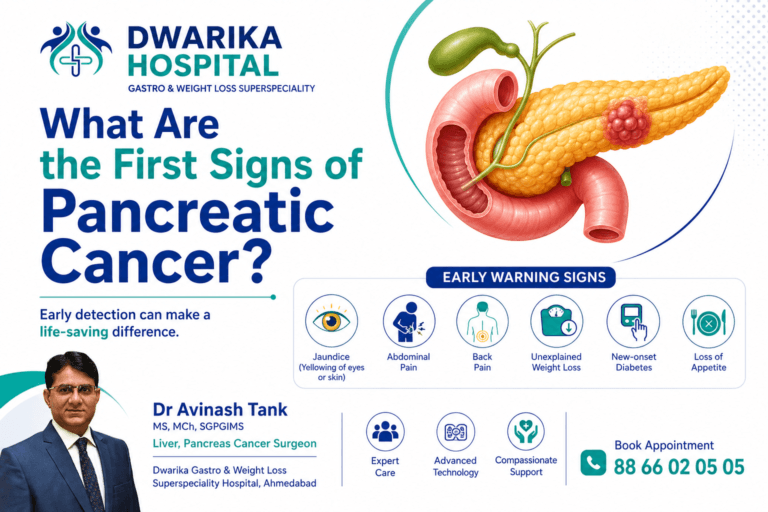
- What Are the First Signs of Pancreatic Cancer?
- Can Pancreatic Cancer Be Detected in Blood Tests?
- Can Pancreatic Cancer Be Cured by Surgery?
Frequently Asked Questions
1. Does early diagnosis improve survival?
Yes. Patients diagnosed when the cancer is confined to the pancreas are more likely to be eligible for curative surgery and have better long-term outcomes.
2. Can pancreatic cancer be cured?
Selected patients with localized disease may achieve long-term survival after complete surgical removal combined with chemotherapy.
3. Does chemotherapy improve survival?
Yes. Chemotherapy before or after surgery has been shown to improve outcomes and reduce the risk of recurrence in many patients.
4. Can survival be predicted accurately?
No. Individual prognosis depends on multiple factors, including tumour biology, treatment response, and overall health.
5. Does age determine survival?
Not by itself. Fitness, nutritional status, and other medical conditions are often more important than chronological age.
6. Should I rely on survival statistics from the internet?
Published statistics provide general information but may not reflect recent advances in treatment or your individual situation. Discuss your prognosis with your treating specialist.
References
- NCCN Clinical Practice Guidelines: Pancreatic Adenocarcinoma
- ASCO Guidelines for Pancreatic Cancer
- ESMO Clinical Practice Guidelines
- World Health Organization (WHO): Cancer Fact Sheets
- National Cancer Institute (NCI): Pancreatic Cancer (PDQ®)
- Recent PubMed reviews on pancreatic cancer survival, surgery, and systemic therapy
Internal Linking Suggestions
- Pancreatic Cancer Disease Hub
- Pancreatic Cancer Surgery
- What Are the First Signs of Pancreatic Cancer?
- Can Pancreatic Cancer Be Detected in Blood Tests?
- Can Pancreatic Cancer Be Cured by Surgery?
- How Is Pancreatic Cancer Diagnosed?
Image Suggestions
- Feature Image: “Understanding Survival in Pancreatic Cancer” with pancreas illustration and hopeful patient-focused design.
- Infographic: Factors That Influence Pancreatic Cancer Survival.
- Comparison Table: Survival Outlook by Stage (Localized, Borderline Resectable, Locally Advanced, Metastatic) using descriptive categories rather than exact percentages.
- Flowchart: Symptoms → Diagnosis → Staging → Treatment → Follow-up.
- Myth vs Fact Infographic: Five common misconceptions about pancreatic cancer survival.
Final CTA
Learn More: Visit our Pancreatic Cancer Disease Hub to explore detailed information about symptoms, diagnosis, staging, surgery, chemotherapy, and recovery.
Request a Specialist Evaluation: If you or a family member has been diagnosed with pancreatic cancer, an early assessment by a multidisciplinary hepatopancreatobiliary (HPB) team can help determine the most appropriate treatment options.
Dr. Avinash Tank (MS, MCh, SGPGIMS)
Liver, Pancreas & Gastrointestinal Cancer Surgeon
Dwarika Gastro & Weight Loss Superspeciality Hospital, Ahmedabad
Book an Appointment / WhatsApp: 88 66 02 05 05

Super-specialist GI, bariatric & cancer surgeon. SGPGIMS (India's premier GI centre) + advanced training in Japan & South Korea. Read full profile →
Last reviewed: July 2026


Comments
Be the first to share your thoughts on this article.