

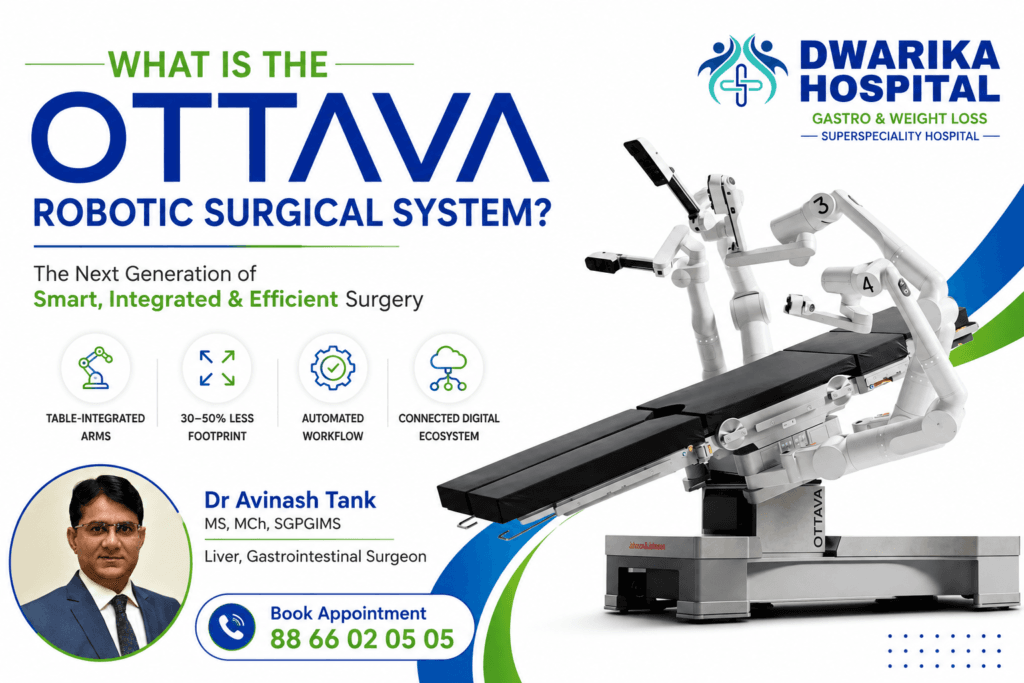
What Is the OTTAVA Robotic Surgical System?
Johnson & Johnson’s OTTAVA Robotic Surgical System has received FDA De Novo authorization, marking an important milestone in robotic surgery. Unlike conventional robotic systems, OTTAVA introduces an entirely new operating room architecture by integrating robotic arms directly into the operating table.
For surgeons, hospitals, and patients, this approval represents much more than another robotic platform—it signals the beginning of the next generation of intelligent, digitally connected surgery.
As a Gastrointestinal, Bariatric and Laparoscopic Surgeon, I believe every new technology should ultimately be judged on one question:
Does it improve patient safety, surgical precision, recovery, and long-term outcomes?
Let’s understand what OTTAVA is, how it differs from existing robotic systems, and whether it represents a genuine leap forward in robotic-assisted surgery.
What Is the OTTAVA Robotic Surgical System?
The OTTAVA Robotic Surgical System is a next-generation soft tissue surgical robot developed by Johnson & Johnson MedTech.
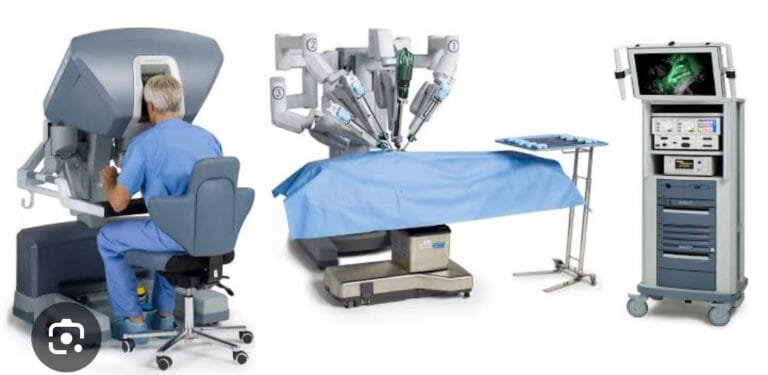
Unlike conventional robotic systems where robotic arms are mounted on a large cart or overhead boom, OTTAVA integrates all four robotic arms directly into the operating table.
This innovative design changes the entire workflow of robotic surgery.
The FDA has granted marketing authorization for multiple general surgical procedures including:
- Roux-en-Y Gastric Bypass
- Sleeve Gastrectomy
- Gastrectomy
- Cholecystectomy (Gallbladder Removal)
- Splenectomy
- Small Bowel Resection
- Appendectomy
- Lysis of Adhesions
- Fundoplication
- Hiatal Hernia Repair
Additional surgical indications are expected over the coming years.
Why Is FDA Approval Important?
FDA De Novo authorization is granted to innovative medical devices that represent a new category of technology and demonstrate safety and effectiveness.
Receiving FDA authorization means:
- The system has undergone extensive engineering evaluation.
- Clinical performance has been reviewed.
- Safety standards have been met.
- Hospitals in the United States can begin clinical adoption.
It is important to understand that FDA approval does not automatically mean one robot is superior to every other platform. Clinical outcomes still depend heavily on:
- Surgeon experience
- Proper patient selection
- Surgical planning
- Team training
- Hospital infrastructure
Unique Features of the OTTAVA Robotic Surgical System
Johnson & Johnson has focused on redesigning the operating room rather than simply improving robotic instruments.
1. Table-Integrated Robotic Arms
This is OTTAVA’s biggest innovation.
Instead of robotic arms coming from a separate cart, they emerge from the operating table itself.
Potential advantages include:
- Less operating room clutter
- Improved movement around the patient
- Easier access for anesthesiologists
- More ergonomic workflow
- Better communication among operating room staff
2. Smaller Operating Room Footprint
According to Johnson & Johnson, OTTAVA occupies approximately 30–50% less floor space compared with many conventional boom- or cart-mounted robotic systems.
Potential benefits include:
- More room inside the operating theatre
- Easier equipment placement
- Improved staff movement
- Better workflow efficiency
This could be especially valuable in hospitals where operating room space is limited.
3. Automated Setup
One challenge in robotic surgery is operating room setup.
OTTAVA introduces automated positioning features including:
- predefined procedural configurations
- automated arm positioning
- simplified docking
- faster transitions
If these features perform consistently in routine practice, they may reduce operating room preparation time.
4. Twin Motion Technology
A unique feature is synchronized movement between:
- operating table
- robotic arms
This allows surgeons to reposition patients during surgery while maintaining robotic alignment.
Traditionally, repositioning may require additional adjustments.
Twin Motion aims to simplify this process.
5. New Generation Robotic Instruments
Johnson & Johnson redesigned many commonly used surgical instruments.
Examples include:
- Two-in-one needle driver
- Improved curved scissors
- Enhanced suturing instruments
- Refined graspers
The objective is greater precision with fewer unnecessary instrument exchanges.
6. Digital Connectivity Through Polyphonic Platform
OTTAVA is designed to connect with Johnson & Johnson’s Polyphonic digital ecosystem.
Potential capabilities include:
- Surgical video management
- Performance analytics
- Educational content
- Data integration
- Workflow optimization
This reflects a growing trend toward data-driven surgery.
Which Operations Can Be Performed Using OTTAVA?
FDA authorization currently includes several common gastrointestinal operations.
These include:
| Procedure | Common Condition |
| Sleeve Gastrectomy | Obesity |
| Gastric Bypass | Severe Obesity |
| Cholecystectomy | Gallstones |
| Fundoplication | Acid Reflux (GERD) |
| Hiatal Hernia Repair | Hiatus Hernia |
| Gastrectomy | Gastric Cancer |
| Appendectomy | Appendicitis |
| Splenectomy | Splenic Disease |
| Small Bowel Resection | Intestinal Disorders |
| Adhesiolysis | Intestinal Adhesions |
Future approvals may expand into additional specialties.
OTTAVA vs Other Robotic Surgical Systems
The robotic surgery market has expanded significantly over the past decade.
Several companies now offer robotic platforms.
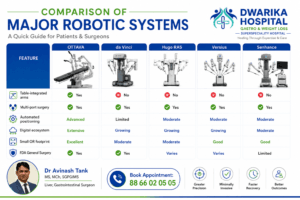
Comparison of Major Robotic Systems
| Feature | OTTAVA | da Vinci | Hugo RAS | Versius | Senhance |
| Table-integrated arms | ✅ Yes | ❌ No | ❌ No | ❌ No | ❌ No |
| Multi-port surgery | ✅ Yes | ✅ Yes | ✅ Yes | ✅ Yes | ✅ Yes |
| Automated positioning | Advanced | Limited | Moderate | Moderate | Moderate |
| Digital ecosystem | Extensive | Growing | Growing | Growing | Moderate |
| Small OR footprint | Excellent | Moderate | Moderate | Good | Good |
| FDA General Surgery | ✅ Yes | ✅ Yes | Varies | Varies | Limited |
Important: Direct comparisons should be interpreted cautiously because long-term clinical outcome studies comparing these systems head-to-head are still limited.
Potential Advantages for Patients
Patients often ask:
“Will robotic surgery give me a better result?”
The answer depends on many factors.
Potential benefits of robotic-assisted surgery may include:
- Smaller incisions
- Reduced blood loss
- Less postoperative pain
- Earlier recovery
- Better visualization
- Greater precision
- Shorter hospital stay in selected patients
However, robotic surgery is a tool—not a guarantee of a better outcome. The surgeon’s expertise remains the most important factor.
Potential Benefits for Surgeons
For surgeons, next-generation robotics may offer:
- Better ergonomics
- Reduced fatigue
- Improved dexterity
- Three-dimensional visualization
- Wristed instrument movement
- Greater precision during complex dissections
- Enhanced suturing capability
Complex procedures such as bariatric surgery, colorectal surgery, liver surgery, and upper gastrointestinal surgery may particularly benefit from these technological advances when performed by experienced teams.
Potential Benefits for Hospitals
Hospitals evaluating robotic platforms often consider:
- Operating room efficiency
- Space utilization
- Staff workflow
- Training requirements
- Instrument availability
- Digital integration
- Long-term maintenance costs
OTTAVA’s table-integrated architecture is specifically designed to address several of these operational considerations.
Limitations and Challenges
Despite the excitement surrounding new robotic technology, several questions remain.
These include:
- Real-world clinical performance
- Cost-effectiveness
- Learning curve
- Availability outside the United States
- Long-term durability
- Comparative outcome studies
- Adoption in different healthcare systems
Large independent clinical studies will be essential before drawing firm conclusions regarding superiority over established robotic platforms.
What Does This Mean for Bariatric and Gastrointestinal Surgery?
The FDA authorization includes several procedures commonly performed by gastrointestinal and bariatric surgeons, such as:
- Sleeve Gastrectomy
- Gastric Bypass
- Hiatal Hernia Repair
- Fundoplication
- Cholecystectomy
- Small Bowel Surgery
These are operations where precision, visualization, and ergonomic instrument control are especially valuable.
As robotic technology continues to evolve, future platforms may further improve surgical workflow, surgeon comfort, and integration of digital technologies into routine practice.
Will OTTAVA Replace Existing Surgical Robots?
Probably not immediately.
Most experts expect multiple robotic platforms to coexist.
Competition generally drives innovation by encouraging manufacturers to improve:
- technology
- affordability
- training
- software
- instrument design
- operating room efficiency
Ultimately, this competition may benefit both surgeons and patients.
Expert Perspective from Dr. Avinash Tank
Robotic surgery continues to evolve at an impressive pace. The FDA authorization of the OTTAVA Robotic Surgical System represents an important technological milestone, particularly because of its innovative table-integrated design and emphasis on digital connectivity.
However, it is essential for patients to understand that the success of any operation depends on far more than the robot itself.
Appropriate patient selection, careful surgical planning, standardized operative techniques, and the experience of the surgical team remain the most critical factors influencing outcomes.
As newer robotic systems enter clinical practice, ongoing research and real-world data will help determine how these innovations translate into improved patient care.
Frequently Asked Questions
Is OTTAVA approved for bariatric surgery?
Yes. FDA authorization includes Sleeve Gastrectomy and Roux-en-Y Gastric Bypass.
Is OTTAVA better than the da Vinci robot?
It is too early to say. OTTAVA introduces several innovative design features, but long-term comparative clinical studies are still needed.
What makes OTTAVA unique?
Its biggest innovation is the integration of robotic arms into the operating table, reducing operating room clutter and enabling automated positioning.
Will robotic surgery become more common?
Yes. Robotic-assisted surgery is expected to expand across many surgical specialties as technology advances and more platforms become available.
Does robotic surgery guarantee better outcomes?
No. Successful outcomes depend primarily on surgeon expertise, patient selection, and the overall quality of care. Robotic technology is an advanced surgical tool that can support precision but does not replace surgical judgment.
Related Links & Call-to-Action
Interested in learning more about advanced gastrointestinal and minimally invasive surgery? You may also find these guides helpful:
- Robotic vs Laparoscopic Surgery: What’s the Difference?
- Is Robotic Bariatric Surgery Better Than Conventional Surgery?
- Gallbladder Stone Surgery: What Patients Should Know
If you are considering robotic, laparoscopic, or bariatric surgery, schedule a consultation with Dr. Avinash Tank (MCh Surgical Gastroenterology, SGPGIMS) at Dwarika Gastro & Weight Loss Superspeciality Hospital, Ahmedabad, to discuss the most appropriate treatment approach based on your individual condition.

Super-specialist GI, bariatric & cancer surgeon. SGPGIMS (India's premier GI centre) + advanced training in Japan & South Korea. Read full profile →
Last reviewed: July 2026




Comments
Be the first to share your thoughts on this article.